Structured design inputs
Normalize heat-loss values, ambient conditions, ingress risks, door loads and cable entry details in a shared enclosure brief.
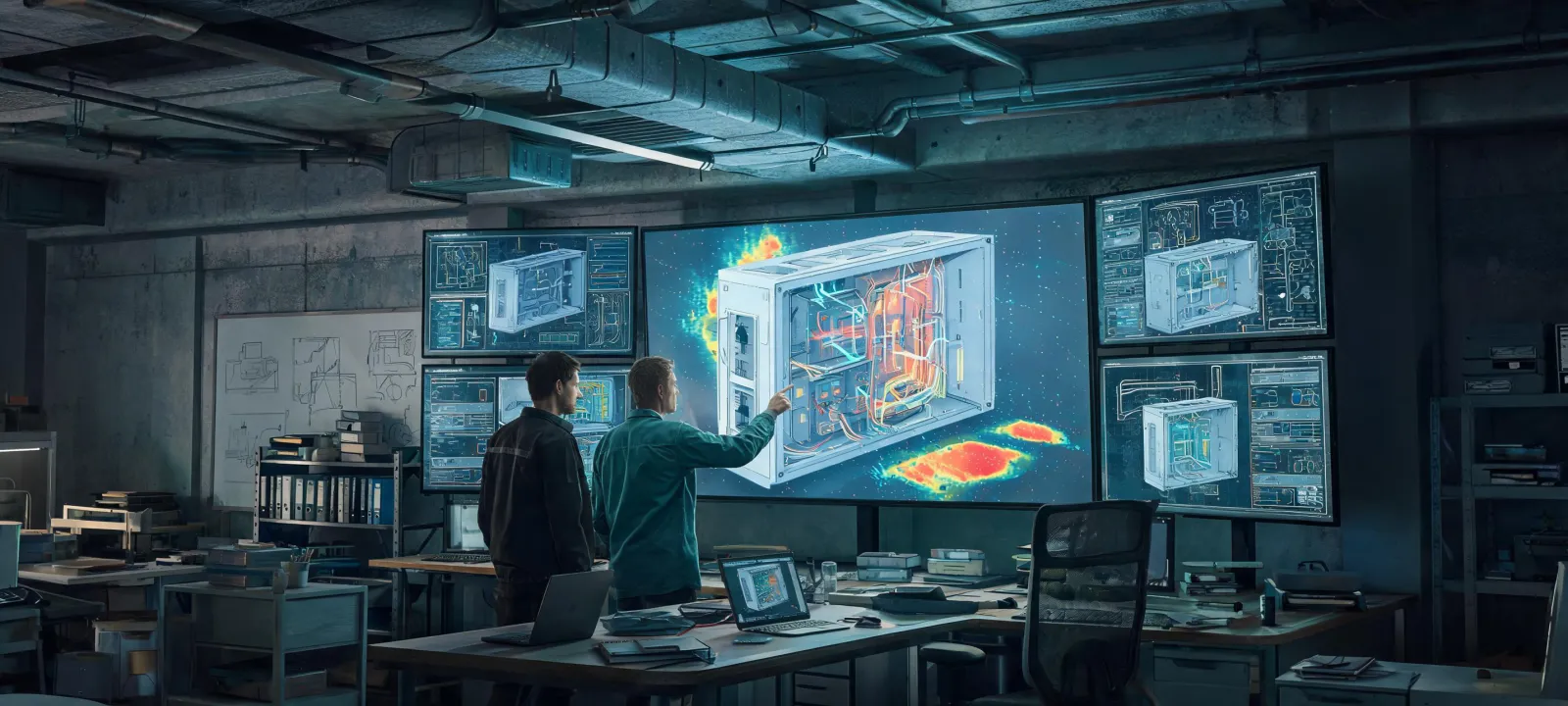
The roadmap is organized around evidence, not a distant promise. Each horizon adds a measurable operating signal while preserving the fundamental work of correct sizing, sealing, grounding and access.
Normalize heat-loss values, ambient conditions, ingress risks, door loads and cable entry details in a shared enclosure brief.
Capture temperature, humidity, filter condition, door state and cooling alarms where the application justifies monitoring.
Use logged thresholds and inspection evidence to schedule work; a sensor alert supports diagnosis but does not replace physical inspection.
Stakeholders sign off installation, access and environmental assumptions.
Panel builders validate component spacing, cable routes and service clearances.
Series documents, drawings and verification responsibilities accompany release.
Commissioning notes and observed thermal behavior update the maintenance record.
Successful delivery depends on clear handoffs among the parties that design, assemble, install and operate the system. Marks and approvals vary by product series and destination market.
The electrical engineer owns the protection basis and assembly-level verification. The panel builder translates that basis into mounting, grounding, conductor separation and access details. The system integrator connects supported condition signals without weakening network controls, while the facility team defines inspection intervals and safe maintenance access. Procurement preserves approved substitutions, destination-market documents and accessory compatibility. This division of responsibility prevents a catalog rating from being treated as approval of the finished installation.
Bring your team’s open questions into one application brief and assign each verification step before procurement.