Define normal operation
Log internal temperature and ambient temperature across representative production states. Record cabinet loading, filter condition and cooling setpoint with each sample.
Connect enclosure climate and access conditions to the people responsible for uptime. A useful digital layer begins with defined thresholds, named alarm owners and a physical inspection process.
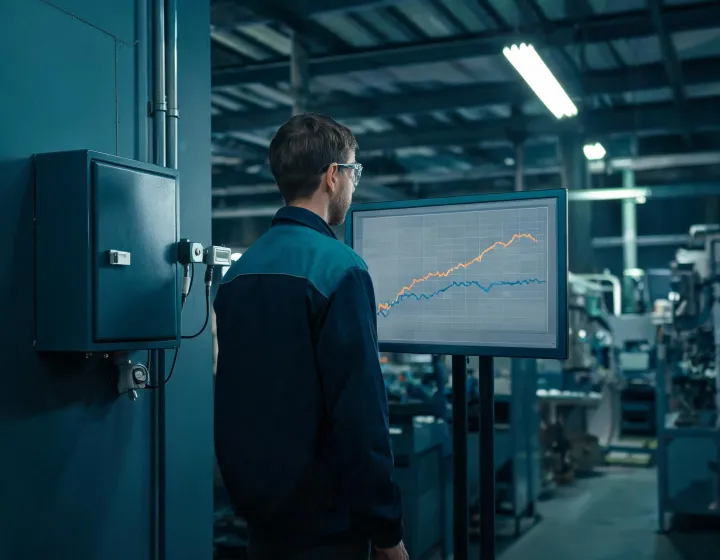
Log internal temperature and ambient temperature across representative production states. Record cabinet loading, filter condition and cooling setpoint with each sample.
Map temperature, humidity, fan status, cooling alarm and door state through the supported device interface. Confirm Modbus TCP, PROFINET or EtherNet/IP compatibility rather than assuming interoperability.
Set warning and escalation bands from equipment limits and measured baselines. Document who investigates each event and the time window appropriate to its consequence.
Compare signal history with filter loading, seal damage, loose connections and airflow obstruction found on site. Adjust maintenance intervals only when evidence supports the change.
Temperature rise can identify a changing heat balance. Sensor location, response time and local hot spots limit interpretation, so placement must be documented.
Humidity data can support condensation-risk review. It does not prove that every seal or cable entry remains intact.
Differential pressure or fan status may indicate filter restriction. Thresholds vary with fan curve, cabinet leakage and installation altitude.
Discrete states improve event context. They require controlled access logic and must not be treated as a substitute for electrical safety procedures.
Digital enclosure programs cross organizational boundaries. The system integrator maps signals, controls engineering defines logic, maintenance validates field conditions, and IT governs connectivity. Procurement preserves the device and documentation requirements through ordering.
Confirm protocol, register map, time synchronization, alarm routing and network segmentation.
Define inspection steps, evidence capture and escalation criteria for each alert class.
Protect sensor placement, wiring separation, grounding and service access in the physical build.
These are workflow targets for an implementation brief, not claims of product performance or guaranteed downtime reduction.
Review available signals, protocol limits, alarm ownership and the physical checks needed to make trend data useful.